Like sheep to slaughter, Government and the AI CONundrum
Things for politicos to consider about the AI CONundrum - so they are not sheeple

Things for politicos to consider about the AI CONundrum - so they are not sheeple:
- Many of the claims about large language model AI industry are unproven and the business case is weak. Experts have grave doubts about its viability. Be prudent.
- Protect States' rights to regulate AI to serve their citizens and consistent with our founders federalist design.
- Don't offer excessive tax incentives for data center development because job generation claims will be overstated.
- Make data center developers pay full costs for increased electric generation, transmission, and distribution. Ensure they protect and compensate for the water supplies.
- Force the concentration of these data centers in discrete State established development zones planned on a regional basis.
- Make it illegal for tech companies to subvert sunshine laws through use of aggressive non-disclosures with government officials.
A perspective from deep technology experience
There is an irrational and bi-partisan belief in the empty promises being made by the Silly-Con Valley elite about the next wave of information and communication technology. Our representatives are poorly equipped to take a contrarian stance against the AI CONundrum. But need to.
In my home state of Pennsylvania, some AI booster releases or articles illustrate the exuberance.
Unfettered but boosterism
Under Governor Shapiro’s Leadership, Pennsylvania is Leading the Nation in AI Readiness – Ranking Among the Top Three States for AI in Government - https://www.pa.gov/governor/newsroom/2025-press-releases/under-governor-shapiro-s-leadership--pa-is-leading-the-nation-in
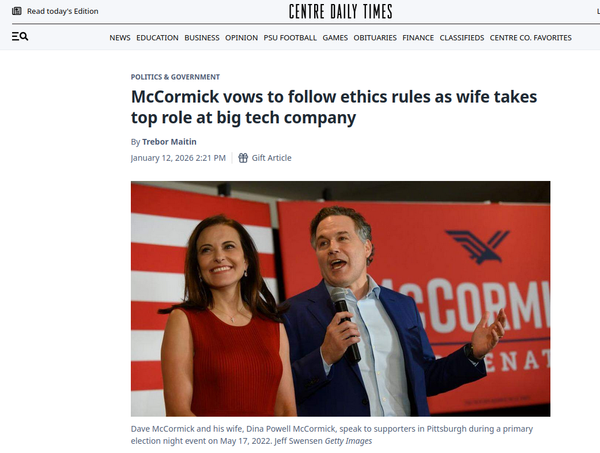
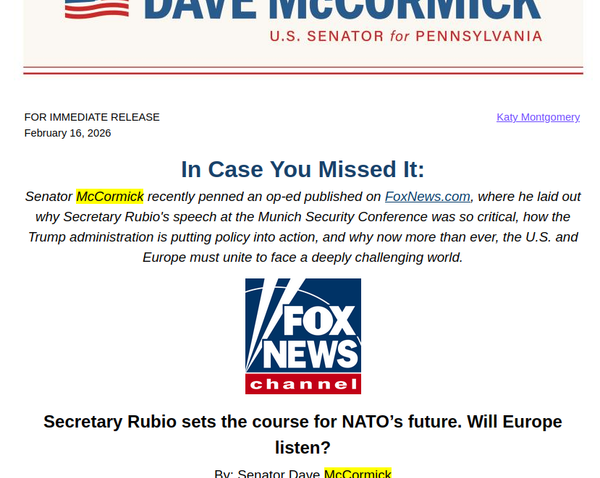
Senators McCormick, Coons Introduce Bill to Boost U.S. AI Leadership With Energy-Efficient Liquid Cooling Technology https://www.mccormick.senate.gov/press-releases/senators-mccormick-coons-introduce-bill-to-boost-u-s-ai-leadership-with-energy-efficient-liquid-cooling-technology/
Dave McCormick: ‘We should be deeply worried’ about China’s AI dominance" https://www.politico.com/news/2025/09/16/dave-mccormick-china-ai-00565303
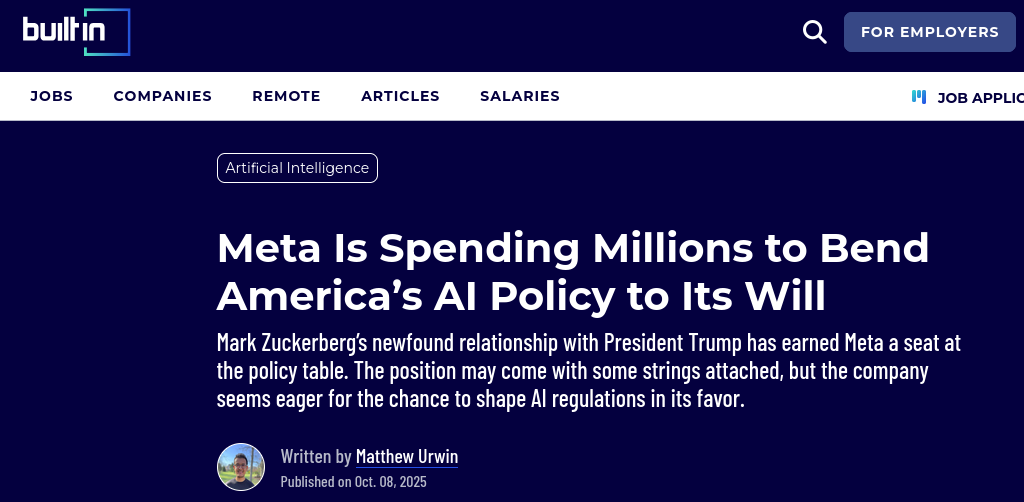
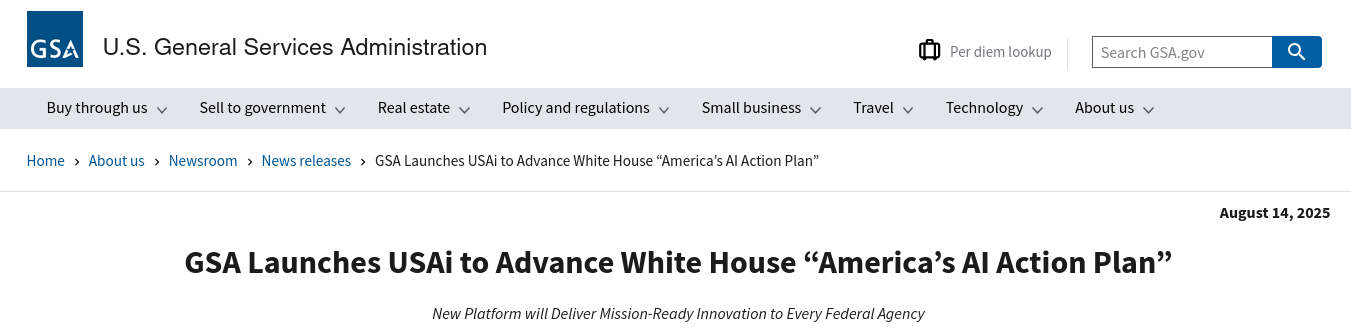
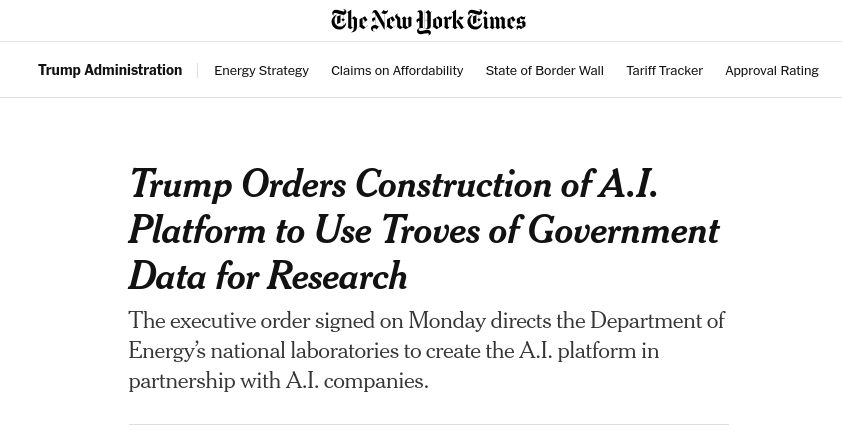
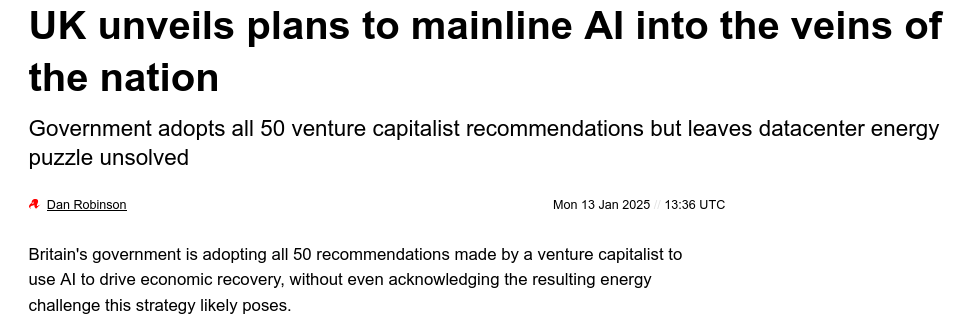
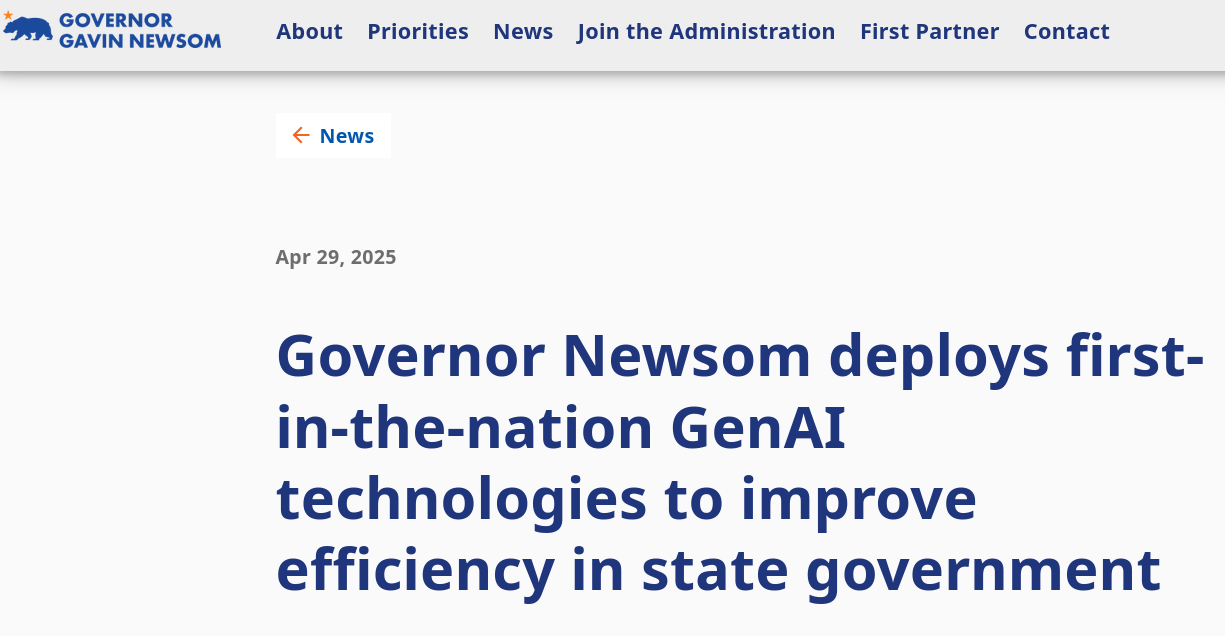
This breathless governmental charge into supporting AI is not limited to my state. Everybody is doing it.

No really, am not a Luddite
Anticipating the Luddite slur, I've worked in technology transfer (moving technologies from the lab to commercial use) and the information technology industry for over 25 years and am academically credentialed in Technology Management, Computer Science, and Marketing. I was very optimistic about information technology. I became jaded as the surveillance economy boomed and the titans of tech started to believe they deserve outsized slices of wealth. I remain optimistic that our younger generations will claw back the balance of power. But our current elected officials need to take off their blinders and not be sheep led to the slaughter.
Death throes of high margin information and communication technology wave
As happens with technology waves: information and communication technology will continue to commodify reducing lopsided incentives for technology companies and their executives, venture and private equity capitalists, and shareholders. That is OK, normal, and expected. Even if the tech lordlings don't like it.
The house of cards that is the technology industrial complex is terrified by the winds of commodification and we are seeing death throes as they hop from big data and automation, the Metaverse, and now AI large language models hoping for a new high margin perpetual subscriptions thing. Unfortunately, these death throes have the potential to break a lot of things on which we depend like the ecosystem, politics as we know it, human rights and so on.
There are well known and proven applications of AI that have not required crazy investment in huge energy sucking data centers ranging from recommendation engines, predictive maintenance algorithms, industrial control systems, marketing analysis and customer service. My prediction is that energy intensive inference and large language models will be replaced by other more efficient architectures. Others who know more than me agree.

But the hallucinogenic gobbling, government influencing, law flaunting SillyConistas truly believe they might become immortal, have an AI god, and all the great unwashed masses will somehow send them subscription dollars forever from their drab rental units owned by the other billionaires.
Protect States' rights to regulate AI as they see fit
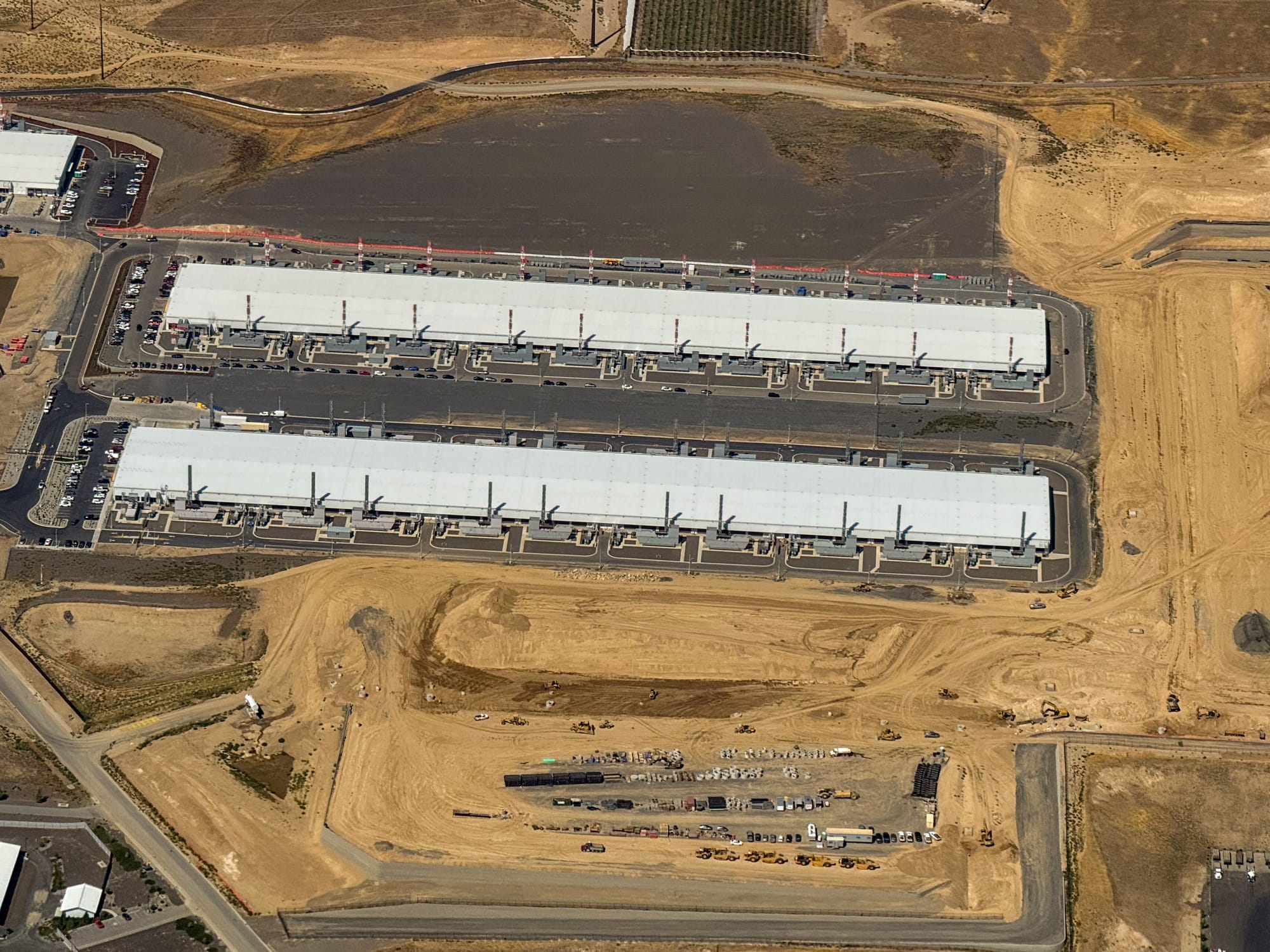
There is a stampede to build massive, and I mean gargantuan data centers that suck city sized electrical flows. Flows for which we have neither transmissions, distribution, nor generating capacity. The capital dollars to build this basic supporting infrastructure are large and who should bear the cost is nebulous.
Big tech, who has little use for government unless it is writing checks, subsidizing their business, or getting out of the way, would like government to share in infrastructure costs for building and running these monster data centers. The tech lordlings promise near infinite benefits like solving all the worlds hardest problems, unlimited economic gain, new industries that politicos would be foolish to miss out on. Like the snake oil salesmen of years gone by, they are full of crap. But armed with shiny slide decks crafted by management consultants and psychologists and supported by well funded influence campaigns, they are persuading the politicos. Not to mention steak dinners, envelopes, and promises of 'private' can't go wrong investments.

Different States will approach AI and data center build outs differently and need the latitude to regulate for their local conditions. States remain responsible for protecting their citizens. Big tech companies operate effectively across a global regulatory sphere and already routinely accommodate different State laws. State regulation is not undue burden. State regulation will not hurt our competitiveness or national defense.
We can expect cries of China and National defense. The Federal Government is fully capable of making AI an industrial and defense priority without limiting States' rights.
What we don't need is central government dictating what States can and cannot do about AI. The founders of our great country would roll over in their graves.
Don't offer excessive tax incentives for data centers
The tech industry has become masterful at extracting subsidies, tax breaks, and incentives from Federal, State and Local governments. The fear of missing out is creating a bidding war between States (good for tech bad for States.) Hyperscaler data centers are not good neighbors since they are huge ugly, noisy, power and water sucking behemoths. We have already seen xAI putting their Colossus data center in a predominantly poor minority neighborhood. It has raised concerns. Here in Pennsylvania we see hyperscalers developing large campuses around very old nuclear power plants that were on their way to being mothballed. Yikes.
Data centers do not really employ many people and the design of large data centers minimizes the labor needed to operate. Except for physical work like connecting wires and fiber optic cable or receiving and mounting hardware in racks, most day to day technical administration can be done over the wire from delivery centers in Southeast Asia and Eastern Europe. There are temporary jobs for construction but many are specialized and the work is fleeting. Some low level of maintenance work is required.
Here in Pennsylvania we have the experience of the fracking industry's job promises that meant we had specialized labor arrive from Texas and Oklahoma and North Dakota during construction and large national service companies often employing out of State specialists to operate the wells and pipelines.
Data centers will be similar with a small number lower level smart-hands people coming from the local labor pool. We can expect the tech sector to deploy the same playbook as the fracking industry pointing to all the indirect jobs that will be generated by the yet unproven AI industry. Hey States - you will miss out on the jobs of the future if you do not make it easy and cheap for us to develop awful industrial sites that suck power and water.
There is no need for AI jobs to be near the data centers. There is this thing called networking that allows people to use data center resources over the wire and often from foreign delivery centers that provide no tax or employment benefit to the U.S. or States in which the data centers are located.
Given many of the boosters run around shouting about needing to move fast to avoid Chinese AI dominance, perhaps running our AI from Asia or Eastern Europe is not in our best interests but our politicians seem to believe if you build it the jobs will come. Wake up! This is an industry (AI) that does not yet have a revenue track record or an understandable business plan to support the cost of these mega centers. Risky? Certainly.
Make data center developers pay full costs for increased electric generation, transmission, and distribution - and protect our water
Politicians are starting to catch on that regular people are going to be pissed if they have to finance the electricity infrastructure for the tech lordlings. To fast track the insane capacity needed, tech firms are striking deals to use aged nuclear plants such as Three Mile Island. The fairest way to handle the glut of data center demand is for data center developments to develop their own generation, transmission and distribution without involving the infrastructure already serving consumers and existing businesses - discrete infrastructure for large scale loads.
If your local utility is trying to get their rate case modified to fund capital upgrades to support data centers, speak out to your States' utility commission. States that slow down generation, transmission, and distribution improvements by their regulated utilities and focus on forcing safe development of Bring Your Own Electricity (BYOE) to the data center developers will serve their State best.
Here in Pennsylvania the utility executives have limited public skepticism about the insane quantity of data center capacity being forecast. PPL's CEO Vince Sorgi said in a recent earnings call:
While reviewing this process [forecasting] is an important step, I want to be clear that these load additions are real, they are coming fast and furious, and focusing on load forecasts alone does not obviate the need to start building new generation now. Forecasts will continue to be refined as they always are, but the near-term risk of overbuilding generation simply does not exist.
The big AI companies, according to Ed Zitron, need to find $2 trillion dollars of AI revenue by 2030 to cover their depreciation. Or the business model is broken. There is not a clear revenue path to do so. If utility executives are wishing and hoping for an AI business model to emerge from the bubble, they will be sorely disappointed.
Vince mentions signed service agreements (ESAs) and letters of agreement (LOAs) to underpin the "realness" of PPL's forecasts. Let's be honest, the hyperscalers and their ilk back out of capacity agreement all day long when the demand is lower than their forecast. They have also negotiated terms in any preliminary agreements to protect their shareholders. I'd not bank those commitments. Certainly wouldn't break ground on big capital projects or make rate decisions quickly. The Pennsylvania public utility commission was prudent to study PPL's rate case more thoroughly.
If you are in an electrical utility or gas and electric utility, you really have no choice. You need to hope AI demand is real and you are going to surf the largest demand increase ever. Its the golden ring to grab. You gotta be out there hustling for the sake of your stakeholders and your own personal wealth. (Not so much your customers who might be left holding the bag from irrational exuberance when utilities build capacity for a bursting bubble.)
Am sympathetic. Numbers are being thrown around. Capacity doesn't just arrive via pixie dust. Utilities want to meet and charge for the demand and certainly are not likely to be the strongest proponents of BYOE. However, they could be builders and maintainers of BYOE systems outside of their regulated business. The marketplace would be more competitive than they might like, but such is life in the big leagues. BYOE may be a safe way for them to participate in the build out without exposing their consumer and commercial customers and themselves to outsize risk.
BYOE would also force data center developers to pay for the build out and maintenance of these huge power needs. Which seems only fair.
Force the concentration of these data centers
These are terrible ugly noisy humongous industrial sites. In Pennsylvania, the municipal planning code (MPC) limits municipal options related to development and makes regional cooperation next to impossible. Pennsylvania has an abundance of fracked natural gas to power electric generation. But running pipelines and wires hither and thither and scattering these huge industrial sites throughout the state will create constitutionally prohibited environmental degradation.
§ 27. Natural resources and the public estate.
The people have a right to clean air, pure water, and to the
preservation of the natural, scenic, historic and esthetic
values of the environment. Pennsylvania's public natural
resources are the common property of all the people, including
generations yet to come. As trustee of these resources, the
Commonwealth shall conserve and maintain them for the benefit of
all the people.
(May 18, 1971, P.L.769, J.R.3)
A single mega data center can use a billion gallons of water a year according to The Conversation's article "Data centers consume massive amounts of water – companies rarely tell the public exactly how much." Make sure water use is disclosed and protect our water resources. To put the billion gallons in context that is roughly what a medium sized city like Allentown Pennsylvania consumes in two months. Not trivial when we are talking about multiple mega-datacenters.
Knowing the State wants to participate prudently in data center development, we should create mega campuses that concentrate the environmental impact and ease regulatory burden and allow investment concentration. Otherwise, we will end up with data centers scattered in the Marcellus shale region next to picturesque rivers. These areas also contains much of our most natural, scenic, and esthetic value in our State.
Make sure the developers, owners, and users of these data center sites pay full lifecycle costs
We can all sympathize with municipalities that have seen under performing industrial sites abandoned leaving clean up costs or environmental remediation costs uncovered. The Union of Concerned Scientists white paper 'An Unrefined Ending' reviews the abandonment of the Philadelphia Energy Solutions refinery and one conclusion is:
Although the refinery’s economic viability had been called into question before this, city leaders had declined to envision a future for the property beyond refining until it was too late. Ultimately, a bankruptcy-court auction determined the fate of the 1,300+ acres of city-center land, with minimal opportunity for input from city leaders or community members.
We can anticipate the ultimate decommissioning of these industrial sites and require an escrow as part of development to fund the inevitable decommissioning. Cooling and power density are the long poles in useful life of a data center. Developers and designers who plan to the site would be desirable. Developers that intend to abandon the site for a fresh greenfield at the end of its lifecycle should be discouraged. In either case, adequate escrow to protect the State and local communities should be collected at time of plan approvals to ensure workmanlike, safe, and environmentally sound decommissioning.
This is easy for our State and Local leaders to anticipate and regulate or legislate. This is important because a lesson the review of the Philadelphia Energy Solutions refinery closing was:
First, these businesses go down fighting, using a portfolio of aggressive legal strategies. Many of the strategies seek to reduce regulatory (e.g., environmental, taxation) compliance costs.
Forewarned is forearmed.
Make it illegal for tech companies to subvert sunshine laws through use of aggressive non-disclosures with government
There have already been cases when public officials have been unable to discuss or get input from their citizens because of non-disclosure agreements. Make the insanity stop. These are developments that need to be approved of in the light of day and take citizen input. Not some secret negotiation between government and the technology companies.